



The Little Saucer That Came Home: A Taiwan UFO Houses Inspired Miniature Modern House
Updated: Apr 30

First Impressions in Miniature
Every so often a miniature looks less like a model and more like it quietly landed, unpacked a sectional sofa, and decided to start hosting dinner parties.
This Taiwan UFO Houses inspired miniature has that exact energy. It is part space-age resort, part lush modern hideaway, and part “I swear the house is judging my patio furniture.” I love the rounded concrete shell, the massive front window wall, the warm living/dining room glowing inside, the planted roof slit, and the lower level with curved little windows that look like they belong to very stylish astronauts.

Stick around, because later in the post we’ll dig into practical ways to chase this look: rounded forms, concrete texture, giant glazing, landscaping, lighting, and that tiny interior moment.
Why This Photo Needs VIP Treatment
Quick tiny-world housekeeping: the image you’re seeing online is web-optimized, which means it looks great on your screen but is not the full print-sharp diva version.
For the real “hang it over your desk and let your guests ask why you own space real estate” experience, order the professional high-resolution canvas print. It comes with FREE U.S. shipping, which is the miniature art equivalent of finding an extra pack of tiny hinges in your junk drawer.
Miniature Backstory – The Tiny Tale
This is The Orbit Garden Residence, founded in 1978 after a retired Taipei noodle-shop owner named Auntie Mei Lin won a suspiciously shiny architectural contest judged by three pigeons, a structural engineer, and a man who kept saying, “The future is round.”
The home was built for the residents of Mooncake Loop, a very small neighborhood where everyone claims to have seen a UFO, but nobody agrees on whether it was alien, government, or Uncle Bao’s new rice cooker. Auntie Mei opened the lower level as a weekend tea lounge called The Saucer & Scallion, while the upper level became her private living room, dining room, library, and emergency pineapple-cake vault.

Every night at 8:08, the roof garden lights up. Locals say it is a landing signal. Auntie Mei says it is “just ambiance,” which is exactly what someone hiding intergalactic guests would say. Easter egg to spot: somewhere in the scene are three tiny mahjong tiles, a single pineapple cake, and a plant named Kevin. Kevin is not important to the plot. Kevin is important to Kevin.
A Guided Tour of the Build
The first thing that grabs you is the shell: smooth, gray, rounded, and calm as a pebble from the future. The roof curves down in one continuous hush, with subtle panel lines that make the surface feel engineered rather than toy-like.
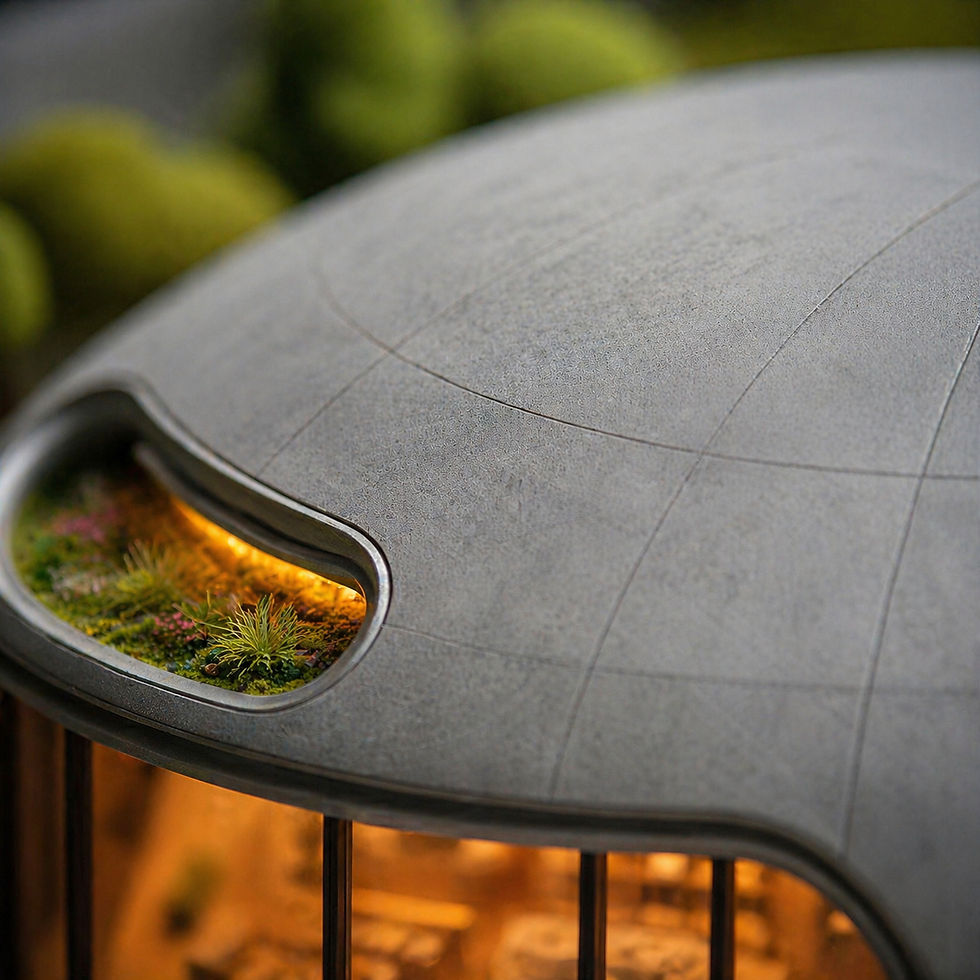
Then the front window wall opens everything up. The interior glows honey-warm against the cool concrete. You can see the living area, dining space, shelving, plants, curtains, and tiny furniture arranged with the confidence of a person who owns exactly one white sofa and somehow never spills tea.
Below, the lower level tucks into the landscape with curved and arched windows. It feels secretive, like the house has a basement jazz club or a very exclusive dumpling lab.

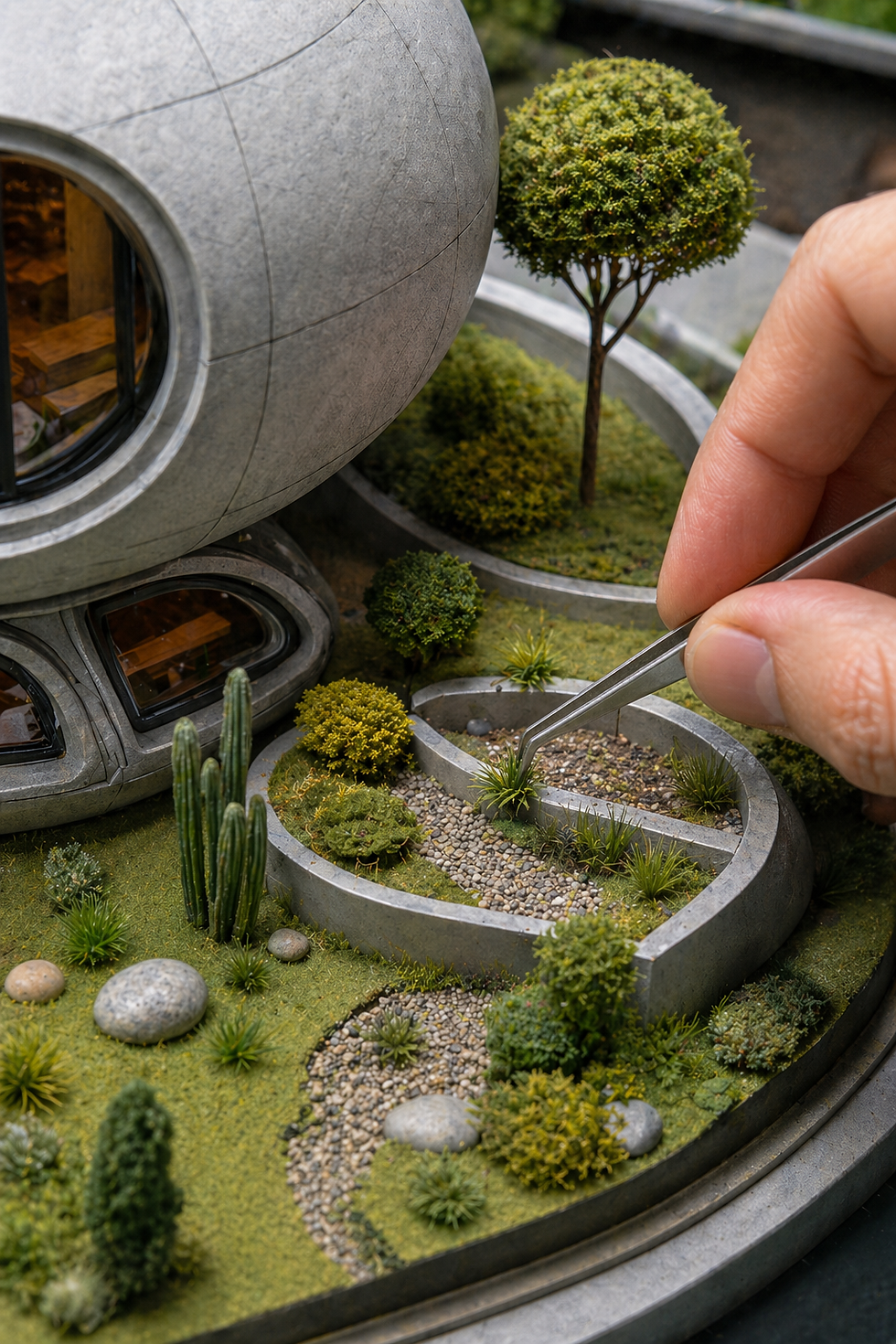
Around it, the garden softens the spaceship: mossy lawns, rounded stones, sculptural shrubs, cacti, path lights, steps, a patio umbrella, and little terraces that make the whole place feel inhabited instead of simply displayed.
Inspirations – From the Big World to the Small
The real Taiwan UFO Houses have one of those histories that sounds like architecture, urban legend, and sci-fi got locked in the same elevator. The famous Sanzhi UFO Houses, also called Sanjhih Pod City, were a group of unusual circular resort structures on Taiwan’s north coast. Taipei Times reported that construction began in 1978, that the project was never finished, and that demolition began on Dec. 29, 2008, after decades of abandonment. The same report notes that the design idea was connected to Finnish architect Matti Suuronen and that construction stopped in 1980 after the original company went bankrupt.
Those Sanzhi structures are gone, but Taiwan’s UFO-house story still echoes through remaining Futuro/Venturo-style examples in Wanli, New Taipei City. The Futuro House itself was conceived by Matti Suuronen in 1968 as a portable ski chalet, and the Futuro House archive tracks surviving examples around the world, including the Wanli location.

This miniature borrows that same space-age DNA but translates it into something warmer and more livable. The old pods had a beach-resort optimism: round forms, weird windows, and the delightful confidence of an era that believed your weekend house should look ready for orbit. Here, that retro-future vocabulary becomes a garden home with a giant glowing living room.
I also see a little John Lautner in the drama. Lautner’s 1960 Chemosphere in Los Angeles hovers above a steep site, with ArchDaily describing its UFO-like presence and its public living spaces arranged around the view. This miniature uses the same emotional trick: lift the home, curve the shell, give the viewer a big cinematic window, then let the interior become the star.
And because I cannot resist a saucer, there is a wink to the LAX Theme Building too. That 1961 Googie landmark is all Space Age optimism, flying-saucer silhouette, and bold structural showmanship. The miniature adapts that confidence at a domestic scale: less airport icon, more “please remove your shoes before entering the moon lounge.”
Last year I spent six weeks in Taipei, and I came home completely enchanted. The architecture, the food, the people, the night markets, the layers of old and new, and the sheer number of inventive small businesses tucked into lanes and corners all stuck with me.
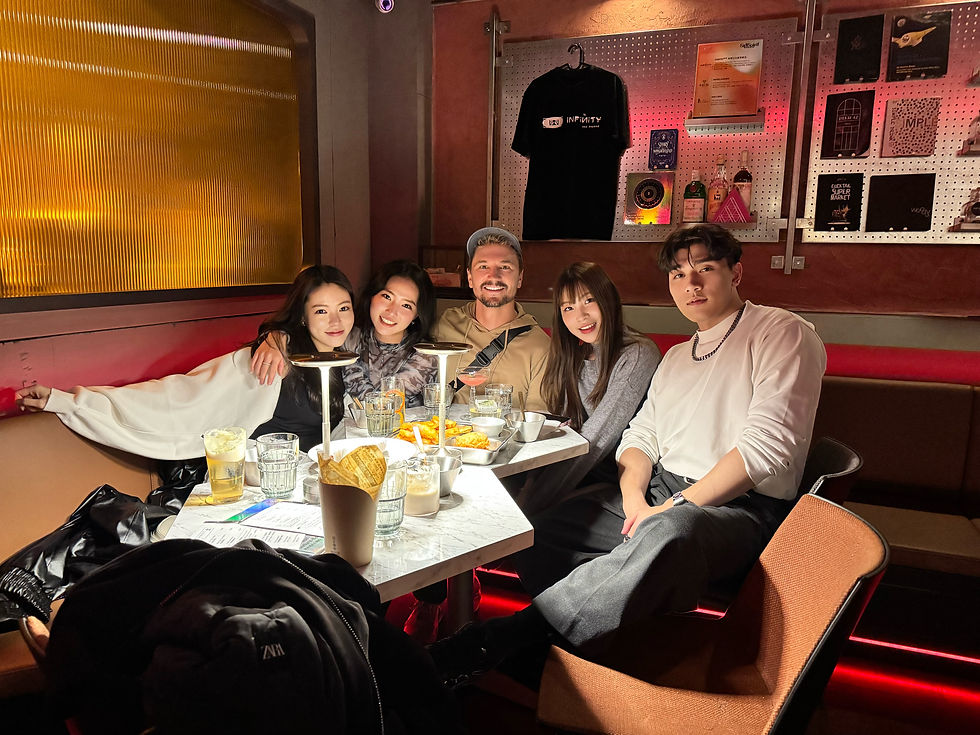
Taipei has this wonderful way of making bold ideas feel personal. You can turn a corner and find a tiny coffee bar, a clever design shop, a noodle counter, a plant-filled studio, or a storefront doing something so specific and charming that you immediately think, “Well now I need to rethink my entire life.” If you want to see more pics from my adventure check out my personal insta brandoninsta88.

That spirit is all over this miniature. Futuristic, yes. But also human. Warm. Local. Full of small-business soul and just enough weirdness to keep the pigeons suspicious.
Artist Tips – Make Your Own Magic
Before you grab a mixing bowl, three LEDs, and a heroic amount of optimism, here is the tiny disclaimer goblin tapping on the glass: this guide is inspiration, not an exact reproduction plan. Your results will vary, your saucer may wobble, and that is allowed. I write these posts from my own miniature-obsessed point of view, and some visual inspiration gets help from image-generation gremlins, who are talented but occasionally think chairs have opinions. Use this as a springboard, not a court summons.
Shopping List
Rounded structure helpers: Try plastic mixing bowls, takeout container lids, ornament halves, foam domes, old lamp shades, or packaging inserts. Purchasable equivalents: craft foam spheres, EVA foam sheets, styrene sheet, foam board, XPS foam, lightweight air-dry clay, and flexible chipboard.
Window wall supplies: Reuse clear food packaging, acetate from packaging, old picture-frame plastic, or transparent report covers. Purchasable equivalents: clear acrylic sheet, acetate sheets, black styrene strips, basswood strips, canopy glue, and micro hinges.

Concrete texture: Use household baking soda, fine sand, spackle, matte acrylic paint, gesso, old makeup sponge, and a stiff brush. Purchasable equivalents: modeling paste, texture paste, fine pumice gel, weathering powders, acrylic washes.
Landscape: Reuse dried tea leaves, coffee grounds, twigs, aquarium gravel, sponge bits, mossy packing foam, and small pebbles. Purchasable equivalents: static grass, model railroad turf, clump foliage, miniature shrubs, gravel ballast, scenic tufts.
Lighting: Reuse a battery tea light, fairy lights, or an old USB LED strand. Purchasable equivalents: warm white micro LEDs, USB-powered mini LED strands, coin-cell holders, copper wire lights, and frosted diffuser film.
The supply list is linked to Amazon affiliate links. Shopping through those links helps fund the tiny world, which keeps the lights on in Mooncake Loop and prevents Kevin the plant from unionizing.
Deep Dive: Building the Saucer
Plan the scale before you chase the spaceship.
A good starting point is 1:24 scale, where 1 inch equals about 2 feet. For a display piece, try a saucer body around 14–18 inches wide, with the front window taking up roughly half the visible face. Sketch the footprint as an oval, then draw the lower level slightly smaller beneath it. Think wedding cake, but designed by NASA and someone who loves houseplants.
Build the rounded bones.
For the main shell, use a shallow plastic bowl, foam dome, or stacked rings of foam board sanded into a curve. Another easy method is to cut oval ribs from foam board, glue them vertically like the skeleton of a boat, then skin them with flexible chipboard or thin craft foam.
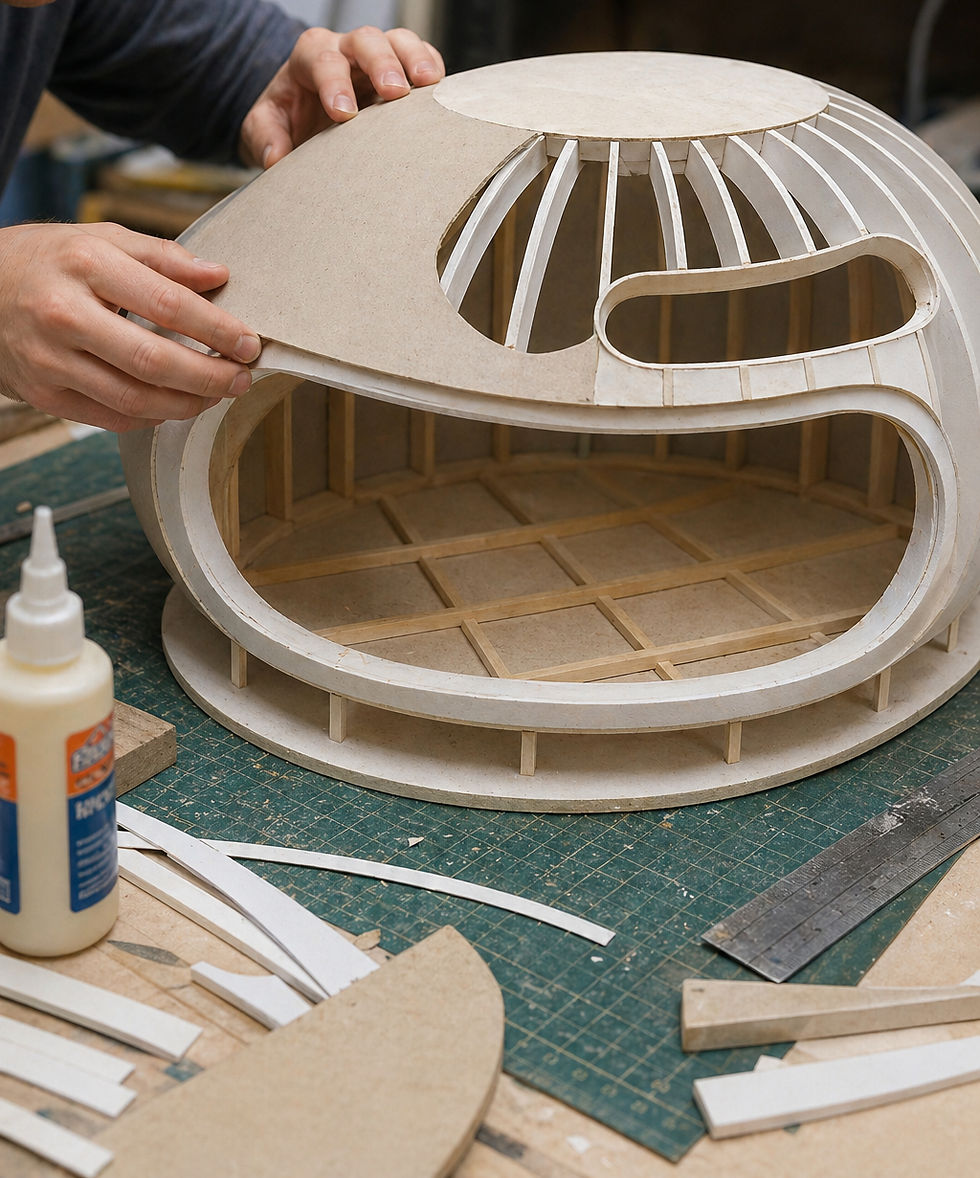
The goal is a smooth saucer profile: flatter on top, fuller at the belly, tucked under at the base.
Craft the giant front window wall.
Mark a long horizontal opening across the front, leaving a thick concrete-looking frame around it. Use clear acetate or thin acrylic for the glass. For the curved effect, gently wrap acetate around a round container and warm it slightly with your hands or a hair dryer on low, keeping the heat moving. Add black vertical mullions with styrene or painted basswood strips. Keep the mullions thin; too chunky and your futuristic retreat turns into a jail for fancy furniture.
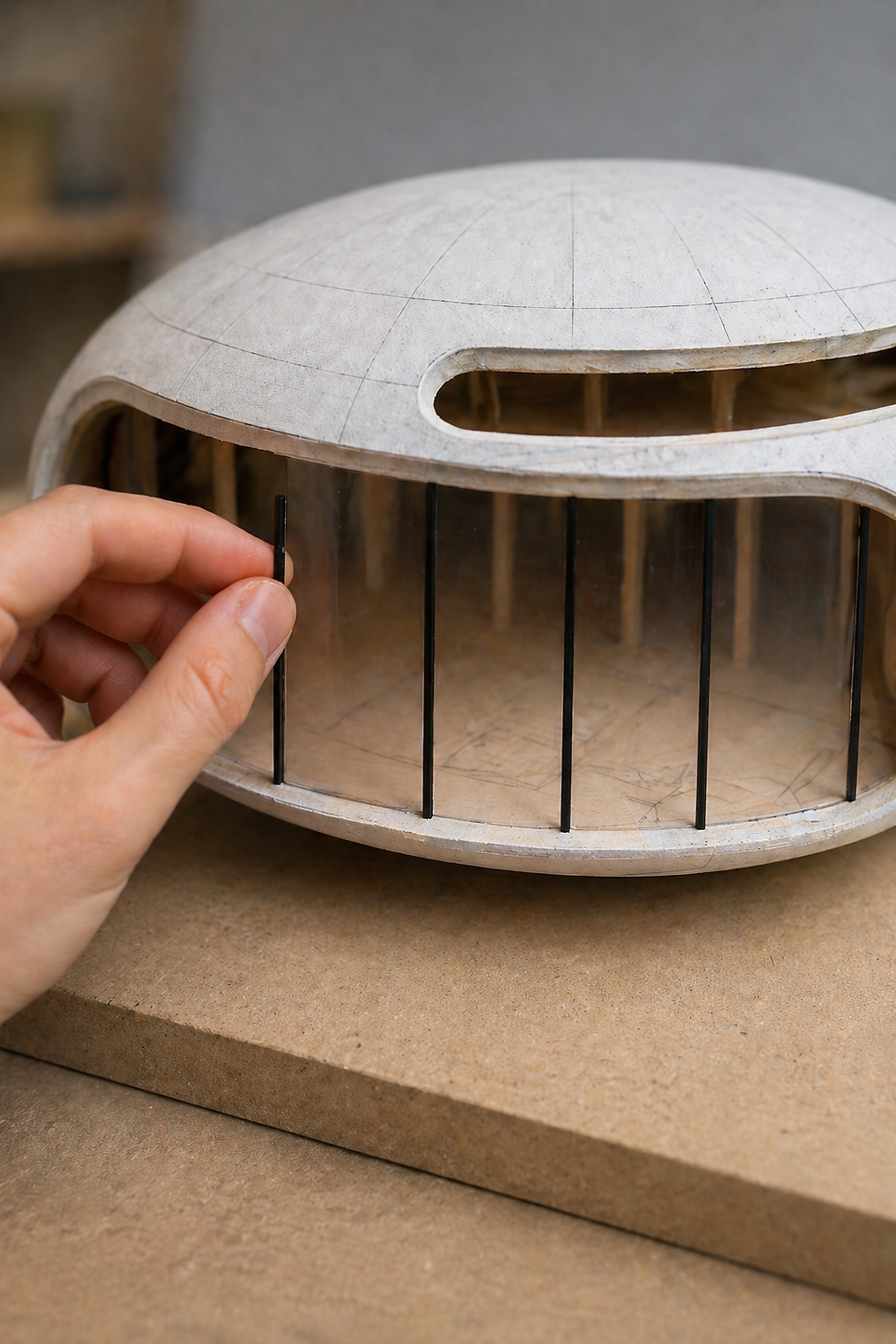
Shape the lower level with curved and arched windows.
Build the lower floor as a smaller oval or rounded rectangle. Use foam board or layered chipboard for the wall. Cut arched window openings with a paper template so every arch matches. For the glass, glue acetate behind the openings. Add painted trim around each arch using thin cardstock strips. Warm amber light behind these windows makes the lower level feel like there is a secret tea lounge inside, which there obviously is.

Create the concrete texture.
Mix matte gray acrylic with a little gesso and a pinch of baking soda or fine sand. Start with a base tone: 2 parts warm gray, 1 part off-white, a tiny touch of raw umber. Sponge it on in thin layers. Once dry, add panel lines with a pencil, scribing tool, or thin gray wash. Dry-brush the raised areas with pale gray. Add soft grime below seams using watered-down brown-gray paint. Concrete should look calm, not dirty laundry.

Build the hero piece: the living/dining room.
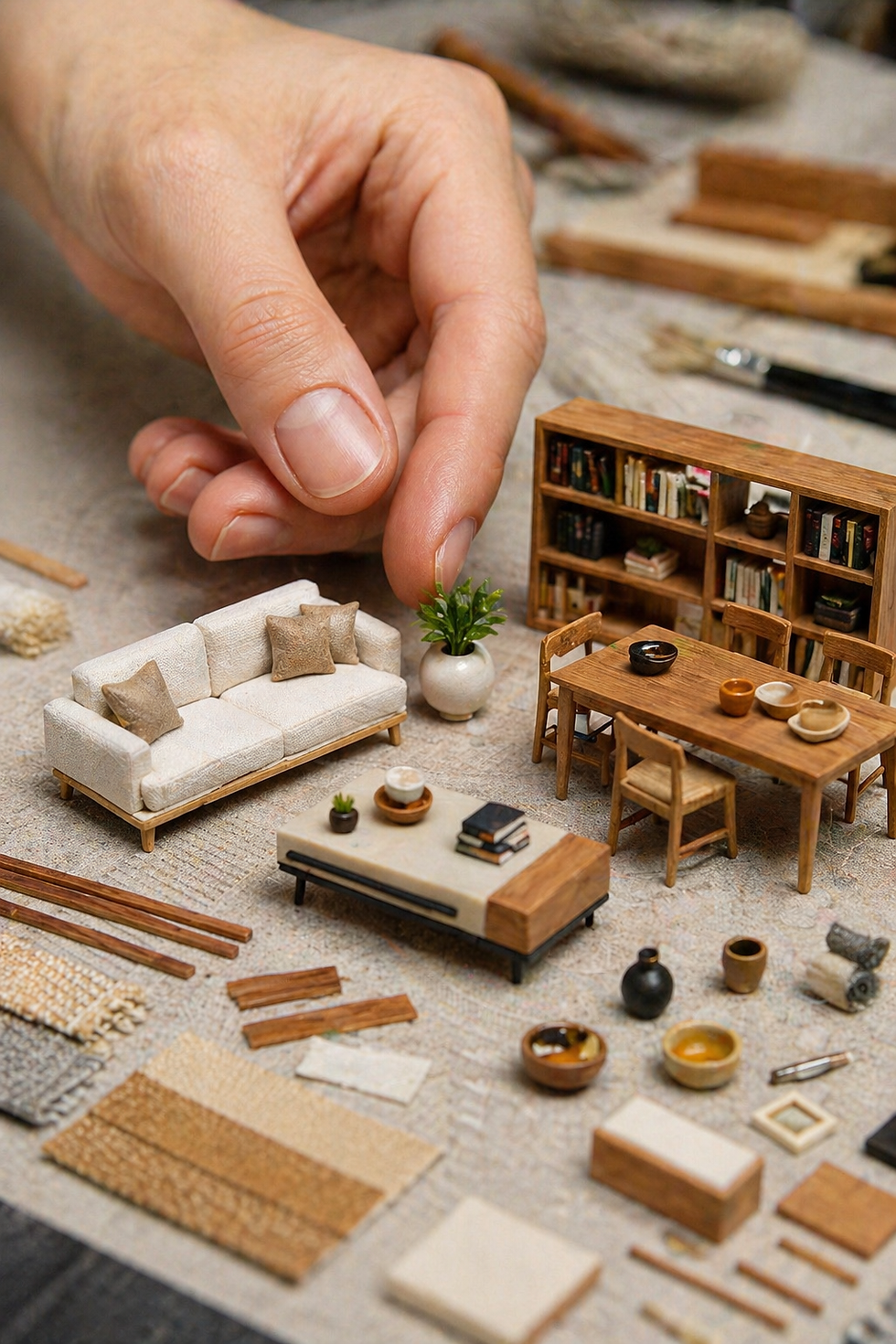
The giant living room is the soul of the model. Place the sofa near the center, dining table to one side, shelving along the back, and plants near the glass. Use warm wood flooring, cream upholstery, tiny books, and a few black accents to echo the window mullions. The trick is depth: put larger, cleaner shapes in front and busier details toward the back. The viewer’s eye should glide from sofa to table to bookshelves like it has been invited in for tea.
Add the roof garden slit.
Cut a long rounded rectangle into the top shell, or fake it by layering a raised rim on the roof. Fill it with fine turf, tiny tufts, pink flower specks, and a thin strip of warm LED light tucked under the front lip. This little garden breaks up the concrete and says, “Yes, I am a spaceship, but I compost.”

Landscape the landing site.
Use layered foam for terraces and paths. Cover flat garden areas with matte green paint first, then add turf so bare spots do not look like bald carpet. Mix textures: fine grass, chunky shrubs, vertical cacti, rounded trees, gravel paths, and smooth stones. Keep plant heights varied. The Taiwan UFO Houses inspiration benefits from a lush setting because greenery makes the futuristic architecture feel less abandoned and more loved.
Light it warmly.
Use warm white LEDs around 2700K–3000K. Cool white can make the scene feel like a dentist office on Mars. Tape or glue LED strands above the interior ceiling line and behind lower windows. Diffuse hotspots with parchment paper, frosted plastic, or vellum. USB-powered mini LED strands are the easiest route for display pieces, especially if wiring makes you suddenly remember you have errands.
Add story clutter and Easter eggs.
Place three mahjong tiles on the patio table, a pineapple cake near the kitchen or shelf, and Kevin the plant somewhere he can supervise. Add sandals by the door, tiny tea cups, a book left open, a stool near the lower lounge, and a small sign for The Saucer & Scallion. Story clutter is what turns “model house” into “someone lives here and might be late for dumplings.”

Photograph it like a discovered place.
Use a low angle, slightly above garden height, so the saucer feels monumental. A gray-blue backdrop creates a Taipei mist mood. Aim one soft light through the front window and one weaker light across the landscape. Shoot at dusk or fake dusk with dim room lighting. A piece of black card held near the window can reduce reflections. The best miniature photos feel like travel photography from a place that almost exists.

Troubleshooting
Problem: The rounded shell looks lumpy.Sand lightly, then skim with spackle or modeling paste. Prime, check under raking light, and repeat. The saucer demands snacks and patience.
Problem: The front glass fogs with glue.Use canopy glue, tacky glue, or clear-drying PVA instead of super glue near acetate. Super glue fumes can cloud clear plastic.
Problem: The window mullions look crooked.Make a paper guide first. Tape it behind the acetate, then glue strips over the lines. Future-you will send a thank-you note.
Problem: Concrete texture looks too rough.Thin your texture mix and build it in layers. At small scale, “subtle” reads as concrete; “chunky” reads as oatmeal.
Problem: The landscape looks flat.Add height: shrubs, small trees, stones, retaining edges, steps, and tufts. A garden needs rhythm, not just green fuzz.
Problem: LEDs are too bright.Diffuse them with vellum or parchment, paint the inside ceiling warm cream, or hide LEDs behind beams and furniture.
Until Next Time in the Small World
The Orbit Garden Residence may or may not be a landing craft, but I respect any house that can host dinner, grow a roof garden, and keep a secret tea lounge glowing under its belly.
This miniature hits everything I love: architectural nostalgia, space-age optimism, Taiwan-inspired design, warm interiors, and just enough tiny nonsense to make me look twice. Drop a comment with your favorite detail: the huge window wall, the roof garden, the lower arched windows, the landscaping, or Kevin, who is pretending not to care.
Share your own creations with #smallworldminiatures, sign up for the newsletter for more tiny-world tours, wander through the online shop, and consider the high-resolution canvas print if this little saucer needs to beam directly onto your wall.
#smallworldminiatures #miniature #miniaturemodel #miniatureart #miniaturearchitecture #taiwanufohouses #sanzhiufohouses #wanliufohouses #futurohouse #retrofuture #spaceagearchitecture #midcenturymodern #googiearchitecture #modernminiatures #dollhouseminiatures #scalemodel #modelmaking #miniatureartist #miniaturelandscape #miniaturelighting #tinyworld #architecturalmodel #fantasyarchitecture #ufohouse #miniaturephotography #interiorminiature #crafttutorial #handmadeinspiration






Comments