



Miniature Sofa Styles Through the Decades: A Velvet Time Machine from Victorian Settees to Curved Modern Couches

Some blog posts are about one glorious little scene. This one is about the entire tiny seating chart. Since our miniature sofa posts keep pulling people in like a suspiciously comfortable cushion, I figured it was time to stop admiring one sofa at a time and throw open the parlor doors to several of them. Not in a formal museum way, either. More in a “please excuse the fabric scraps, I’m time-traveling through upholstery history” way.
What I love about miniature sofas is that they instantly tell you what kind of room you’re in. A tufted Victorian settee whispers, “Do sit up straight.” A mid-century sofa says, “I own at least one walnut sideboard.” A giant overstuffed 1980s couch says, “We are not moving for the rest of the evening and snacks will be consumed here.” At full size, that’s interior design. In miniature, that’s storytelling with armrests.
So today’s post is a little different from my usual feature format. No guided tour. No tiny tale. No one suspiciously wealthy miniature aunt with a dramatic backstory and a parlor full of secrets. This one is a workshop: a miniature sofa style guide through the decades, with one shared supply list, repurposing ideas for donor sofas, and a compact build path for each style built around the same three essentials: frame, stuffing, upholstery.
In other words, we are about to make a whole tiny sitting room family tree.
From the Big World to the Small
Furniture history is basically fashion with better legs. When I look at sofa styles through the decades, I’m really looking at how people wanted a room to feel. Victorian pieces loved ornament, ceremony, and curves. Art Deco cleaned that up into sleek glamour and geometric confidence. Mid-century modern trimmed the fat, showed off the frame, and let proportion do the talking. The 1970s loosened the tie, sank lower to the floor, and invited lounging. The 1980s inflated everything like comfort had a marketing department. By the 1990s and early 2000s, the room started relaxing again—slipcovers, sectionals, family-scale sprawl. Then the recent wave brought back sculptural silhouettes, curves, bouclé, and a sort of “I am a cloud, but make it expensive” attitude.

A few big-world touchstones always help me map the style DNA. Victorian upholstery owes plenty to the richly layered interiors you’d associate with William Morris-era pattern culture and the overall love of ornament in late 19th-century interiors. Art Deco sofas feel right at home beside the polished luxury of Émile-Jacques Ruhlmann and the crisp geometry of Deco architecture. Mid-century sofa language instantly calls up designers like Florence Knoll and the warm restraint of postwar modernism. Later curves make me think of Vladimir Kagan, where furniture starts acting less like a box and more like a gesture.
That’s the fun part in miniature: you don’t need to reproduce every historical detail to make the style read. You just need the right silhouette, the right cushion attitude, and upholstery that doesn’t fight the decade.
Scratch-Build or Repurpose? Yes.
Before you cut a single piece of chipboard, let me make the case for miniature sofa makeovers. You do not have to build every sofa from scratch. In fact, sometimes the smartest move is finding a donor piece with decent bones and giving it a new decade. A thrifted dollhouse sofa, a mass-produced plastic loveseat, an unfinished wood kit, or that slightly tragic seat from a mixed furniture lot can all become something much more interesting with reshaped arms, new padding, better fabric, and replacement legs.
Here’s what I look for in a repurpose candidate:
A silhouette that is at least adjacent to what you want
A frame that feels solid enough to sand, glue, or re-cover
Arms and back that can be built up or shaved down without a meltdown
Legs that can be swapped, shortened, or hidden with a skirt
Cushions that are removable, or at least not fused to the thing like ancient geology

A donor sofa is especially useful for Deco, 1980s overstuffed forms, slipcovered sofas, and sectionals. Victorian and sculptural modern curves can still be repurposed, but they often need more surgery. Nothing terrifying—just enough tiny furniture plastic surgery to make you feel powerful.
My general rule: if the proportions are right, upholstery can fix a lot. If the proportions are wrong, even beautiful fabric will look like it is trying to save a doomed marriage.
Make Your Own Magic
A quick reality check before we dive into the upholstery abyss: this guide is for inspiration, not exact duplication. Your scale, materials, donor piece, patience level, and tolerance for gluing your fingers to a chaise-like object will all vary. I write these blog posts, and I use AI-generated concept art to help visualize ideas, but occasionally the tiny design gremlins still sneak in and give us a seam where no seam should be, or a sofa leg that seems to exist in an alternate dimension. So treat the illustrations and proportions as a design conversation, not a sacred blueprint.
What matters most is that you capture the feel of the style. You are not taking a furniture history exam. You are building a believable little world. That means your Victorian settee can be a touch simpler, your Deco sofa can be slightly less severe, and your modern curved couch can be built with materials you actually enjoy using rather than whatever some full-scale showroom would like to charge you a kidney for.
Now let’s stock the worktable.
One Supply List for All the Sofas
I like a supply list that begins in the junk drawer and only then graduates to the craft cart.
Frame materials
Raid-the-house options: cereal box cardboard, shipping box chipboard, foam packaging, coffee stirrers, popsicle sticks, thin scrap wood, old gift card plastic, bamboo skewers, bottle caps for templates
Purchasable equivalents: basswood strips, plywood sheets, mat board, styrene sheet, MDF shapes, precut dollhouse furniture blanks
Stuffing and padding
Raid-the-house options: makeup sponges, felt scraps, quilt batting, cotton pads, packing foam, old mouse pad foam, worn-out dish sponge centers, scrap felted sweater pieces
Purchasable equivalents: upholstery foam sheets, EVA foam, needle-felt batting, polyester stuffing, dense craft foam, thin foam tape

Upholstery
Raid-the-house options: old shirts, linen napkins, velvet ribbon, worn flannel, thin socks, handkerchiefs, fabric sample cards, ribbon offcuts, textured knit scraps
Purchasable equivalents: miniature-scale cotton prints, linen blends, velvet, faux suede, bouclé-look fabric, dollhouse upholstery fabric, embroidery thread for tufting
Detail materials
Raid-the-house options: beads for feet, jewelry bits, toothpicks, twist ties, paper clips, button thread, foil, old packaging cord, nail-head stickers from stationery stashes
Purchasable equivalents: dollhouse legs, resin feet, jewelry findings, brass pins, pearl cotton, upholstery trim, miniature nailheads, piping cord
Adhesives and finishes
Raid-the-house options: white glue, masking tape, painter’s tape, binder clips, wax paper
Purchasable equivalents: tacky glue, contact adhesive, fabric glue, super glue gel, wood glue, filler putty, gesso, acrylic paints, matte varnish
Tools
Craft knife, sharp fabric scissors, metal ruler, sanding sticks, pin vise or awl, tweezers, clamps, small brush set, sculpting tools, needle and strong thread, fine pencil, cutting mat.
I’ve linked the buyable versions through Amazon affiliate links, which is a very civilized way for your supply run to toss a few crumbs back into the tiny kingdom.
Planning and Scale Notes
For 1:12 scale, a standard sofa usually lands somewhere around 6 to 7 inches wide, with a seat height near 1 1/2 inches and a seat depth around 2 1/4 to 3 inches, depending on the decade. Victorian and formal styles sit a bit more upright. Mid-century stays slim. 1970s onward gets loungey. Modern sculptural forms often cheat the rules by visually lowering the profile while keeping enough structure to not collapse into melancholy.
Before you build, decide three things:
Silhouette: high back, low back, curved, boxy, rolled-arm, skirted, exposed frameComfort level: crisp tailoring or sink-right-in softnessFabric attitude: smooth, nubby, glossy, patterned, tailored, wrinkled-on-purpose
Sketching even a crude side view helps more than people think. Tiny furniture problems usually begin when the seat is too deep, the arms are too fat, or the back is so tall the whole thing looks like it belongs in a miniature airport lounge.
Safety Notes, Because Tiny Crafting Can Still Bite
Use a sharp blade, not a heroic dull one. Sand resin or MDF with a mask. Ventilate when using strong adhesives or spray finishes. Keep hot tools off wandering fabric scraps. And when working with vintage donor furniture, be cautious about old flaky finishes. Tiny sofa drama should stay in the design language, not in your lungs.
The Decades on the Cushion: 8 Miniature Sofa Styles
Victorian Tufted Settee
The Victorian settee is theatrical in the best way: curved back, carved legs, maybe a cameo-level amount of drama.

Frame: Build a narrow, upright seat box from chipboard or basswood. Add a gently serpentine back by laminating thin card in layers. The arms should sweep outward or roll softly forward. Keep the legs visible and delicate.
Stuffing: Use thin foam on the seat and a slightly puffed batting layer on the back. For tufting, pre-mark a diamond grid. This style wants structure with controlled plushness, not marshmallow chaos.
Upholstery: Velvet, damask-look cotton, or a tiny floral works beautifully. Wrap the seat first, then the inside back, then the outside back panel. Tuft with strong thread and tiny beads or knot anchors hidden on the reverse. Finish with braid, piping, or painted faux-gilded trim.
Repurpose shortcut: Start with any formal loveseat that already has a curved back. Sand off clunky details, sharpen the silhouette, add batting, and recover.
Art Deco Club Sofa
Now we trade lace cuffs for a cocktail cart.

Frame: Build a clean box with low, squared arms and a back that meets them at nearly the same height. Deco sofas look symmetrical, confident, and slightly smug in a glamorous way.
Stuffing: Keep the padding flatter and firmer than Victorian styles. A thin foam layer over a crisp frame does most of the work. Cushions can be separate, but they should look tailored.
Upholstery: Faux suede, velvet, satin-look cotton, or even a subtle geometric print. Think jewel tones, ivory, black, deep green, midnight blue. Add welt cord or very fine trim, but don’t over-frill it. Deco likes polish.
Repurpose shortcut: A plain square-arm donor sofa is gold here. Replace bulky seat cushions, tighten the lines with filler or thin card, and re-cover in a sleeker fabric.
Mid-Century Modern Walnut-Frame Sofa
This is the sofa that knows what a sideboard is and probably has opinions about teak.

Frame: The visible frame matters. Use basswood strips for the outer skeleton, with slim arms, tapered legs, and a low horizontal profile. The back should feel light, not blocky.
Stuffing: Thin seat and back cushions, neatly boxed. Use dense foam or layered felt rather than fluffy stuffing. The charm is restraint.
Upholstery: Tweed, linen, muted solids, tiny herringbone, or warm mustard, olive, charcoal, and rust. Keep seams clean. Button tufting can work, but just a couple of buttons on the back cushion—nothing too fussy.
Repurpose shortcut: Find a plain sofa and remove the upholstered side bulk. Add a scratch-built wood frame outside it, shorten the legs if needed, and simplify the cushions.
1970s Channel-Tufted Lounge Sofa
The 1970s did not come here to sit politely.

Frame: Go lower, wider, and a little softer in outline. A straight sofa works, but a gentle curve or extra-deep seat sells the decade fast. Build a broad base and keep the legs hidden or minimal.
Stuffing: This is where thicker foam shines. Create channel tufting by gluing rounded foam strips side by side across the back, seat, or both. Soften the edges with batting.
Upholstery: Velour, corduroy, boucle-look knits, or suede-like fabric. Colors can lean avocado, burnt orange, tobacco, ochre, cream, or moss. Let the sofa look lounged-in, not military.
Repurpose shortcut: An overstuffed donor couch from almost any era can be pushed into the 1970s with channel padding and groovier fabric. This is one of the friendliest makeover styles.
1980s Overstuffed Rolled-Arm Sofa
This sofa is here for family movie night, ambitious shoulder pads, and absolutely no minimalism.

Frame: Build a broad seat box with chunky rolled arms and a generously cushioned back. The proportions should feel abundant. If it looks a tiny bit excessive, you’re close.
Stuffing: Layer foam, then batting, then more batting where you want that sink-in look. Seat cushions should dome slightly. Arms should look padded enough to support a nap and a questionable decorating choice.
Upholstery: Florals, soft stripes, dusty mauves, beige, blue, or traditional upholstery textures. Add a skirt if you want full suburban glory. This is a good place for welt cord around cushions.
Repurpose shortcut: This style loves donor sofas. Add padding, thicken the arms, hide ugly legs with a skirt, and re-cover in something cozy.
1990s Slipcovered Cottage Sofa
The 1990s version says, “We light candles and own at least one basket.”
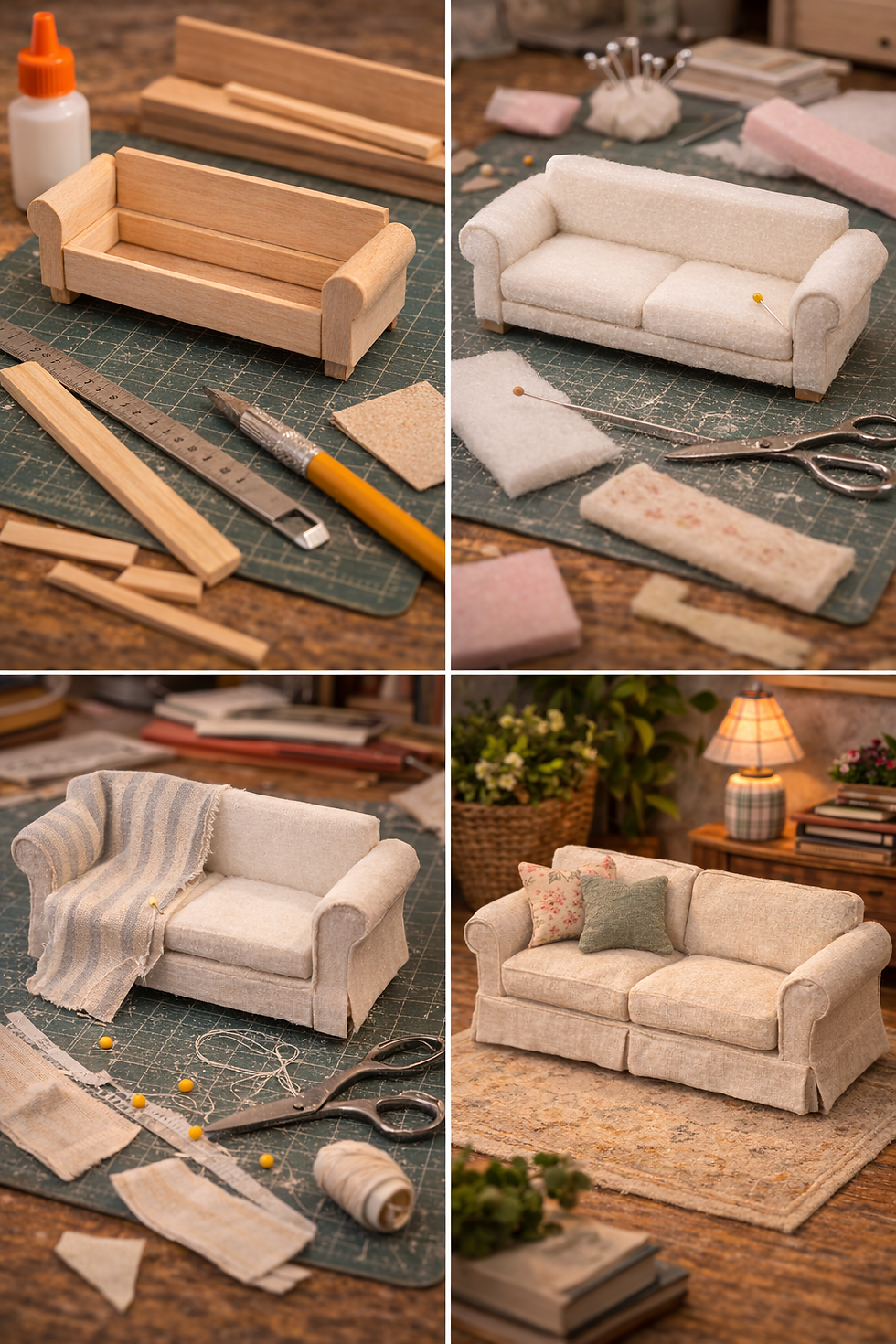
Frame: Keep it simple: rolled arm or square arm, medium back, balanced proportions. Nothing too ornate. The magic is less in the bones and more in the relaxed finish.
Stuffing: Soft but controlled. Use modest foam and light batting so the sofa feels cushioned but not inflated. Slightly overfilled seat cushions help.
Upholstery: Linen-look cotton, faded stripes, pale florals, off-white, duck egg, sage, oatmeal. The slipcover should fit, but not like vacuum-sealed tailoring. Let it relax a little. Add a skirt or loose seat cover flap for authenticity.
Repurpose shortcut: Possibly the easiest makeover of the bunch. Wrap a donor sofa in a custom-fitted slipcover and suddenly it has read three decorating magazines and moved to the coast.
2000s Modular Sectional
This is the era of square arms, big rooms, and furniture that arrives in pieces and never quite leaves.

Frame: Build in cubes and rectangles. Make one long sofa section, one chaise or return, and keep everything blocky. Straight lines are your friend here.
Stuffing: Use firm foam blocks with lightly softened corners. Sectionals are comfortable, yes, but visually structured. Separate seat and back cushions help the modular look.
Upholstery: Microfiber-look suede, leatherette, charcoal, tan, espresso, taupe, muted blues. Keep the seams straight and the cushions broad. Topstitching can be hinted at with pencil lines or fine thread.
Repurpose shortcut: Donor loveseats can be cut apart and rearranged into a sectional surprisingly well. Add one scratch-built corner unit and suddenly you are in business.
Contemporary Curved Bouclé Sofa
And here we are in the era of the sculptural cloud.

Frame: Build the silhouette first. Use layered card, flexible foam, or carved dense foam to create a continuous curve. Keep the back integrated with the arms so it reads like one soft gesture instead of three separate components.
Stuffing: Smooth, even padding is everything. This style wants a rounded edge, not lumpy stuffing. Sand foam if needed, then wrap in thin batting for a clean skin.
Upholstery: Bouclé, teddy-texture knit, nubby cream, warm camel, dusty blush, mushroom, or soft gray. Avoid busy patterns. This style lives or dies on shape and texture.
Repurpose shortcut: Start with any low sofa, then build the new form over it with foam and batting. Hide the old geometry under enough soft mass and it becomes a whole new species.
Troubleshooting: When the Tiny Couch Starts Arguing Back
Problem: The sofa looks bulky and toy-like - Fix: Thin the arms, lower the back, and reduce cushion thickness. Most miniature sofas improve when you remove 10–15% of the puff.
Problem: The upholstery looks wrinkled in a bad way - Fix: Use thinner fabric, clip curves before folding, and work in this order: inside back, seat, arms, outer shell. Ironing the fabric first is not glamorous, but it is effective.
Problem: Tufting pulls the whole piece out of shape - Fix: Pre-drill or pre-poke the tuft locations, use firmer padding underneath, and pull each tuft gradually rather than yanking like you are starting a lawn mower.
Problem: The donor sofa still looks like the donor sofa - Fix: Change at least three things: arm shape, leg style, and fabric. One makeover move is a refresh. Three is a transformation.
Problem: The cushions look sad and flat - Fix: Add a thin batting wrap over dense foam, then pinch the edges slightly so the center domes. Tiny furniture needs exaggeration to read correctly.
Problem: The style isn’t obvious - Fix: Push the signature move harder. More tufting for Victorian. Straighter lines for Deco. More exposed wood for mid-century. More depth for 1970s. More puff for 1980s. More relaxed skirted fabric for 1990s. More box for 2000s. More curve for contemporary.
Until Next Time in the Small World
That, my friends, is a whole miniature sofa timeline without once asking a tiny person to choose just one seat.
I love this kind of post because it reminds me that miniature making isn’t only about reproducing a single perfect object. It’s about learning the visual language of a style, then translating it into something small enough to sit in the palm of your hand and still somehow carry an entire decade on its cushions.
And honestly, this is where miniatures get mischievous in the best way. One donor loveseat becomes a Deco jewel. Another turns into a 1990s slipcovered nap magnet. A plain boxy base becomes a modern bouclé curve with delusions of showroom grandeur. It is furniture reincarnation, and I support it fully.
Drop a comment with the sofa style you’d build first. Victorian drama? Mid-century cool? A 1970s lounge beast that practically demands tiny fondue? I want to know. And if you make one, share it with #smallworldminiatures so I can see what decade moved into your tiny living room. While you’re at it, take a look around the shop, sign up for the newsletter, and give our other sofa posts a browse too. Apparently we are all, collectively, very susceptible to tiny seating.
#miniatures #smallworldminiatures #miniaturesofa #dollhouseminiatures #miniaturefurniture #miniaturemaking #miniatureartist #diyminiatures #sofastyles #interiordesignhistory #victorianstyle #artdecointeriors #midcenturymodern #retrodecor #modernfurniture #tinyinteriors #dollhousefurniture #makersgonnamake #miniaturedesign #miniaturedecor #upcycledesign #creativehobbies #tinyworlds #handmademiniatures #scalefurniture #miniatureworkshop






Amazing so helpful 👏