


Evidence on the Mantel: A Sherlock Holmes Miniature Study

My Vision for This Small World
My Sherlock Holmes miniature study brings the room’s comforts and peculiar habits into the same small space. Green patterned walls and dark timber frame a glowing hearth, while the letters, pipe and slipper suggest a detective who has other priorities than tidying. The plaid-covered chair gives the scene a soft landing among all those clues. Light gathers around the familiar furnishings, leaving just enough shadow for the next mystery to feel close at hand.
Some links earn me a commission from qualifying purchases and help keep this tiny world growing. As an Amazon Associate I earn from qualifying purchases.
The CUTEBEE Owl Bookstore is a tempting little retreat for anyone who loves books and tiny rooms. All those shelves and small details invite a closer look, making it a charming companion to a growing book-nook collection.

Miniature Backstory: The Tiny Tale
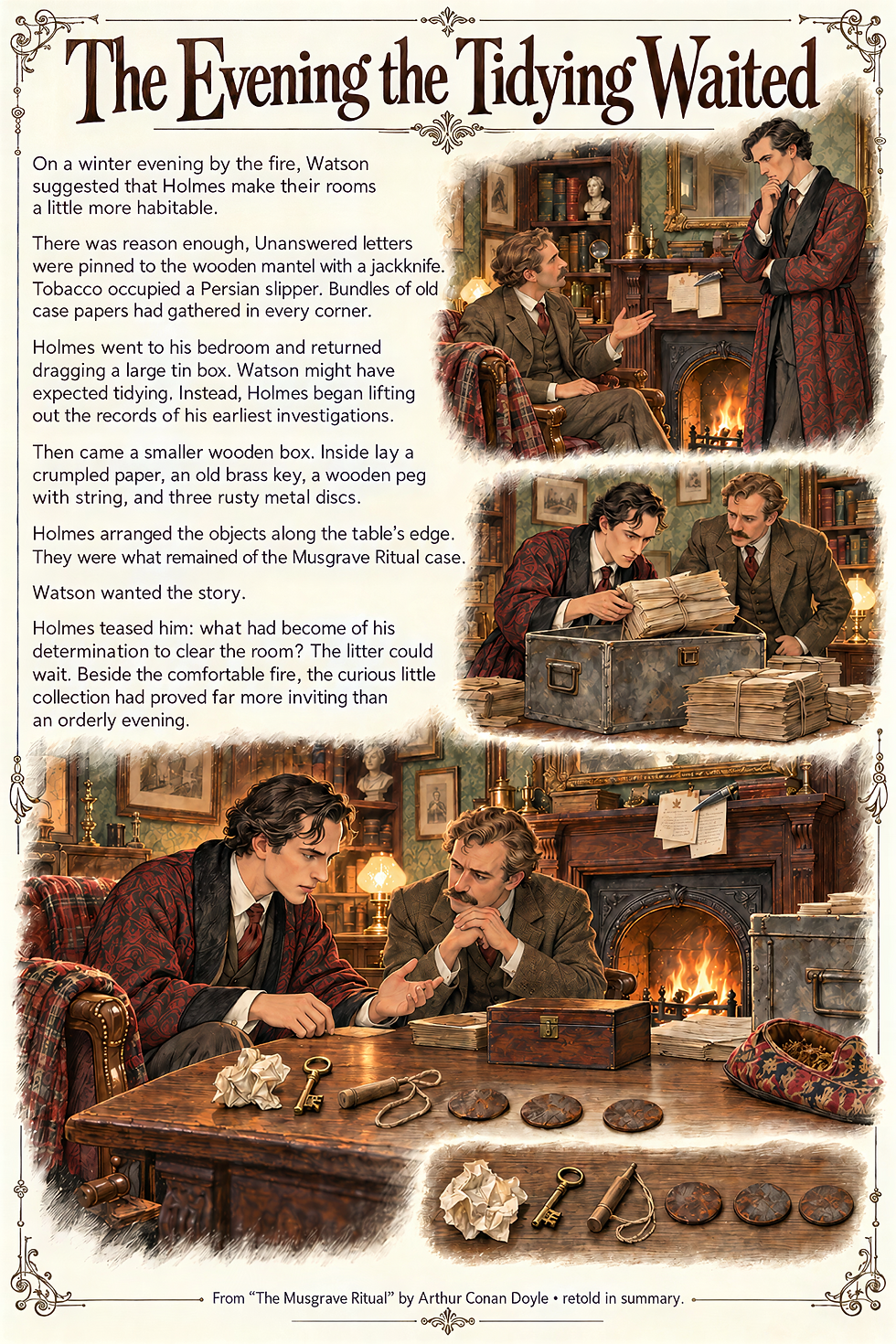
That is the moment I would hold in this room: the instant a reasonable request to clear up becomes an invitation to investigate. The model offers an interpretation of Holmes's domestic world, rather than an exact illustration of that evening. Its letters spread across the mirror area; Doyle places the knife in the wooden mantel. The slipper is visible by the hearth, but its contents cannot be established from the picture. The tin box and case relics belong to the tale, not to the photographed model. The joke already supplied by the story is plenty: Watson has accidentally found the one subject more attractive than a tidy room.
Give tiny metal details a sense of age and history with Vallejo Rust 70.183. Weathered hinges, old tools and little found objects can add so much character to a miniature story.

A Guided Tour of the Build
The mantel and its very firm correspondence policy
The cream papers break up a tall, dark mirror, with the knife making a sharp diagonal across their soft edges. Below, a generous curved pipe, small books and brass-colored objects spread along the shelf. I like the contrast between the decorated frame and the improvised noticeboard. The overlapping letters bring the eye forward while the mirror suggests depth behind them.

The hearth and the slipper
The fireplace combines a dark arched insert, carved-looking timber and narrow metallic highlights. Its orange light spills onto the hearth and polished-looking floor. A patterned slipper sits just off center, low enough to reward a second look. The surrounding dark surfaces give that little patch of color breathing room; the fireplace tools add fine vertical lines without crowding the opening.

The reading corner
At the left, tightly packed shelves gather books, small bottles and a pale bust above a round table. The warm lamp lights a closed volume while the plaid throw tumbles over the wooden chair. Along the front, a patterned runner softens the floorboards. These overlapping textures make the study inviting, even when its resident's approach to stationery raises questions.

The MiniCity Library of Gods Book Nook turns a love of books into a grand little display. Its fantasy-library atmosphere makes it an appealing gift for someone who would happily spend an afternoon exploring tiny shelves.

Inspirations: From the Big World to the Small
The strongest precedent is Doyle's own room description. It identifies objects that tell us about habits, not simply a period: letters become a permanent fixture, an ordinary slipper changes jobs, and old papers resist disposal. In miniature, that means a few distinctive choices can carry more character than a shelf full of anonymous accessories. Leave enough empty surface around each important object for its oddness to register.
William Morris's wallpapers offer a useful design comparison for the muted botanical wall treatment. The V&A describes his patterns as stylized arrangements of plant forms, with examples ranging from flat, ordered motifs to luxuriant leaves. Bring a little of that leafy rhythm to your own walls: repeat a small leaf silhouette in restrained green and ocher, then reduce the contrast until the correspondence remains easy to see. For another approach to patterned walls and a warm hearth, explore my William Morris-inspired fireplace miniature.
Late-Victorian illustrated fiction supplies another reference. The original Strand pages of The Musgrave Ritual use Sidney Paget's black-and-white illustrations to pull attention toward faces, gestures and a few telling objects. That economy suits a tiny room. Concentrate the sharpest edges at the letters and hearth; let distant books dissolve into quieter shapes.

The MiniCity Hemingway House Book Nook gives book lovers a little house to get lost in. It is a lovely addition to a shelf where stories and miniature interiors share the same happy space.

Artist Tips: Make Your Own Magic
AI-assisted imagination helped furnish this study. Build a shallow, open-front room box to keep the fireplace close to the viewer, then choose the detail that makes you want to sit down and work. Holmes can manage with a little less molding if necessary.
Plan your Sherlock Holmes miniature
A suggested 1:12 scale makes ready-made chairs, books and lamps easy to coordinate. A base around 25 cm wide and 20 cm deep is a useful starting point, not a measurement of the supplied scene. Treat this as an intermediate project because several layered assemblies must fit together. A simpler version uses a purchased fireplace and chair, while keeping the wallpaper, paper props and composition handmade.
Gather your supplies
Structure and joinery: Start with clean, flat packaging board for templates and small details, plus unused wooden coffee stirrers for trim. For the load-bearing shell, choose sturdy bookboard or thin craft plywood, with basswood strips for reliable straight edges. Add wood glue for bare wood and a suitable paper adhesive for card. Keep a flat drying surface and small clamps nearby.
Color and surfaces: Reuse plain paper for wallpaper tests and washed fabric scraps for the runner and throw. Purchasable equivalents include miniature wallpaper, fine cotton fabric and thin felt. Gather acrylic paints in dark brown, warm brown, cream, muted green, charcoal and antique gold. An optional compatible satin finish adds controlled sheen to the timber; the walls can remain matte.
A little antique gold goes a long way in a miniature room. AMACO Rub ’n Buff Antique Gold adds a rich finishing touch to decorative frames and accents, perfect for those details that deserve to catch the eye.

Furniture and story details: Fold book pages from clean scrap paper and cut covers from thin card. Save unprinted packaging for letters and a blunt imitation knife. Small wooden beads, fine cord and narrow paper strips help with knobs, trim and tools. Optional ready-made miniatures include a chair, pipe, bottles, bust and fireplace insert. Use empty decorative bottles rather than actual chemicals or tobacco.
Tools and lighting: Use scissors, a craft knife, a protected cutting surface, tweezers, fine brushes and a sanding block. A ready-made low-voltage miniature lighting kit with its matched power supply is optional; painted highlights also work. Read the instructions for each adhesive, coating and light before use, especially its material compatibility, ventilation and drying requirements. Keep small parts and cutting tools away from children and pets.

1. Block out the room and the sightlines
Draw a paper floor plan with the fireplace on the rear wall, shelving on the left and a narrow return at the right. Make folded-card stand-ins for the mantel, chair and round table. Keep the chair slightly turned toward the fire, leaving the slipper visible beside the hearth. Look into the arrangement from your intended viewing height before cutting structural material.
Use a known 1:12 chair or a simple scale template as your proportion check. The fireplace should feel substantial without swallowing the walls. Mark the mirror area and leave a clear strip for letters below its upper frame. Plan a hidden cable route behind the chimney breast and an accessible power location outside the room. Keep this stage dry and movable; a paper chair is very forgiving about relocation.

2. Assemble the base, walls and floor
Cut the base and wall panels, then dry-fit them at right angles. Work on a stable cutting surface, secure the material and keep your other hand out of the blade's path. Laminate thinner board where extra stiffness is needed, spreading adhesive evenly rather than soaking one side. Brace the rear corners with strips and let the shell dry flat before adding weight.
Lay floorboards from thin stripwood or scored card, staggering the end joints. Add a slightly raised card hearth in front of the future opening and narrow skirting around the walls. Leave the fireplace footprint and any wood-glue contact areas bare. Titebond's guidance recommends clean, unfinished wood for its wood glues; painted surfaces weaken that connection. Follow your chosen adhesive's curing instructions before lifting the room by its walls.

3. Give the room its wood and wallpaper
Paint the floor and trim warm brown, then brush a thinner dark-brown glaze along the grain direction. Wipe high areas gently so the darker color remains near joints. Make a sample first: the grain should read as quiet variation, not a striped fence. Let each layer dry before the next, and reserve any protective satin finish for a fully dry, compatible painted surface.
Fit matte green botanical paper between the timber sections. Make paper patterns for awkward corners, check them dry, then apply a thin, even adhesive layer. Smooth from the center outward with clean scrap paper protecting the print. Add slender dark trim to hide joins. A simpler wallpaper uses repeated hand-painted leaf shapes on muted green paper; keep them small and low-contrast so the letters retain their visual importance.

4. Build a layered fireplace and mirror
Construct two square mantel supports from stacked card or small basswood blocks, bridge them with a shelf, and add thin strips for recessed panels. Build the curved insert separately: cut a broad arch from layered card and attach shallow decorative shapes around it. Paint the insert charcoal, then touch the raised edges with a barely loaded gray brush. Let the assembly dry before fitting it against the finished wall.
Make a grate from card strips or a ready-made miniature insert, keeping it decorative rather than functional. Use a card rectangle painted in muted gray and brown for the mirror, or choose acrylic mirror sheet with finished edges; avoid cut glass. Surround it with layered card molding painted antique gold. Test its angle before fixing it, since a bright reflection can overpower the letters. Simpler flat trim still gives a convincing frame.

A touch of shine can make a tiny object catch the light beautifully. Vallejo Gloss Varnish 70.510 is a useful finishing addition for miniature painters who enjoy bringing out those small, polished details.
5. Add safe firelight and the table lamp
Use a complete, ready-made low-voltage fire-effect unit if you want the hearth to glow. Position it behind dark, painted imitation coals according to its clearance instructions, with no real flame, heat source or loose combustible material against the light. Route the insulated cable through the planned opening without pinching it. Keep connectors and the matching power supply accessible outside the model, and follow the kit's specified assembly method.
Test the light before enclosing the fireplace back. A compatible miniature table lamp can share the scene if its manufacturer supports the intended connection; do not improvise electrical joins. Place it temporarily at the left and compare the two pools of light. The fire should reveal the hearth texture without turning the whole room orange. For an unpowered version, paint warm highlights on the coals and floor, then supply the glow with external photography lighting.

6. Furnish the reading corner
Make the shelves as simple open boxes with stripwood fronts, leaving enough depth for book spines and small empty bottles. Fold paper into book blocks, wrap each with a card cover, and vary the height slightly. Build the round table from a card or wooden disc on a stable miniature pedestal, or use a ready-made piece. Assemble and cure furniture joints before painting them to match the room.
Bring a fresh touch of Victorian elegance to your dollhouse with iLAND’s white-and-green 1:12 furniture set. The graceful shapes and gentle color palette make a lovely starting point for a room full of character.

Choose a chair whose arms do not conceal the mantel from the main angle. Drape fine plaid cotton over its back, turning the cut edge under or treating it with a fabric-compatible finish after a scrap test. Weight the folds gently until they settle. Cut a runner from fine printed fabric, keeping its border straight with the floorboards. Dry-fit the lamp and books, then secure only the pieces that need to survive handling.

7. Arrange the correspondence and the slipper
Cut several cream-paper letters, adding tiny uneven ink-like strokes rather than readable private correspondence. Overlap them across the lower mirror area to follow the image, or attach them to the timber mantel for a closer reading of Doyle. Make the knife entirely from blunt card, with a silver-painted blade and layered brown handle. Glue it in place as a visual prop; never drive a real blade through the model.
Build the slipper around a small card sole with a shaped paper upper, then cover it in fine patterned fabric. An extra folded piece beneath the toe helps retain its hollow shape while the adhesive dries. Set it beside the hearth, place a decorative pipe on the mantel and leave small gaps between the books and brass-colored accents. Add a few brown paper curls only if you want to suggest the literary tobacco detail. Check the scene from the front before committing every prop.

Photograph the quiet before the next case
Place the completed room on a stable table against a matte, gently curved backdrop. Position one broad diffused light off to the front-left and a white card on the right to lift the shadows. Keep diffusion material away from hot lamps and use a suitable cool light source. Work near miniature seated-eye height for the main view, then move closer for the correspondence, slipper and reading corner.
Lower the exposure if the lamp loses its surface detail or the fire becomes a white patch. Shift the light or model slightly to control mirror reflections before editing anything. Focus on the letters for one frame and the hearth edge for another; a single extreme close-up need not keep every book sharp. Include a little base edge in at least one photograph so viewers can appreciate the room's physical miniature scale.

Small mysteries, practical fixes
Warped wallpaper or floor: Use less moisture, let separate layers dry flat and test adhesive on the same paper first. Flatten a loose panel before installation rather than fighting it once it is glued into a corner.
Timber that looks muddy: Return to the warm base color, then add fewer dark grain strokes. Keep the heaviest shade in recesses and leave small clean highlights along exposed edges.
A bulky throw or slipper: Choose a finer weave, reduce hidden seam allowances and test the folds before gluing. Thick upholstery fabric rarely becomes delicate simply because the scissors are small.
The Odoria Blue Lotus porcelain tea set brings blue-and-white charm to a 1:12 table. Set out a tiny cup beside a favorite chair, and suddenly the room feels ready for a leisurely afternoon.

Clutter hiding the story: Remove one accessory at a time until the knife, letters and slipper are readable. Lower the light level or adjust its position if glare, rather than quantity, is causing the confusion.
Closing: Until Next Time in the Small World
I like a miniature that lets an absent character remain unmistakably present. Here, the fireplace invites us closer and the correspondence explains why Watson's evening of tidying may be in trouble. Which detail would you keep most prominent: the paper-covered mirror, the glowing hearth or the slipper with a second career?
Share your own literary corners with #smallworldminiatures, and tell us which book moment you would like to shrink next. You can also join the newsletter for more small-world inspiration and explore the online shop. Just leave a clear patch of mantel for the mail. Holmes has already demonstrated what happens when that system gets away from you.






Comments