



A Miniature Venetian Palace at Dusk: Tiny Canal Lights, Arched Windows, and a Very Dramatic Bridge

Opening – First Impressions in Miniature
I am a complete pushover for a miniature Venetian palace that looks like it owns at least three secret staircases, a scandalous family history, and one houseplant with opinions. This tiny canal-side beauty has everything I love: warm lantern light, ornate facade trim, arched windows, rounded steps, decorative tiles, a little bridge, moody water reflections, and enough flowers to make a florist panic politely.
Stick around, because after we enjoy the view like tiny tourists with tiny gelato, I’ll walk you through a build guide inspired by this scene.
Why This Photo Needs VIP Treatment
This image is web-optimized, which means it looks lovely on your screen but is not meant to be stretched into a giant print from a tiny file. Pixels, like gondoliers, have limits.
For wall art, go with the professional high-resolution canvas print version when it’s available in the shop. It gives the glowing windows, canal reflections, carved trim, and lush greenery the room they deserve to show off. Plus, there’s FREE U.S. shipping, which feels very fancy for something that does not require a passport or a boat.
Miniature Backstory – The Tiny Tale
Welcome to Palazzo Lucerna delle Rose, founded in 1724 after Countess Viola Lucerna won a card game against a silk merchant, a glassblower, and a suspiciously well-dressed pigeon named Ottavio.
The palace became famous for three things: its glowing arched windows, its balcony gossip, and the annual Festival of Misplaced Keys, during which every resident insists they “just had it a moment ago.” The locals say the canal water glows at dusk because the house lanterns reflect across the surface. The less practical locals say it is because Ottavio the pigeon hid a cursed emerald somewhere under the bridge and refuses to disclose the location due to “family reasons.”

The current residents include Signora Belladonna, who grows flowers from every balcony and claims each plant has a first name; Maestro Pippo, who paints decorative tiles while humming opera too loudly; and a tiny cat named Biscotti who has never paid rent but somehow owns the best balcony.
Easter egg for readers: look for the “golden pigeon” motif in your own version of the build. Tuck it into a tile, a railing curl, a planter, or under the bridge where only the nosiest viewer will find it.
A Guided Tour of the Build
The first thing that grabs me is the light. Those amber windows glow like the palace is full of chandeliers, secrets, and maybe one person dramatically reading a letter near velvet curtains.
The facade is deliciously ornate, with layered arches, columns, carved trim, and repeating patterns that make the whole building feel dressed for an opera opening. The black balcony railing cuts a beautiful lace-like line across the pale stone. Below it, rounded steps sweep down toward the canal like the palace is politely inviting you to arrive by boat.

The water is rich blue-green, carrying little ribbons of gold from the lanterns. The bridge in the background adds story and depth, while the plants and flowers soften all that architectural drama. Pink blossoms, leafy vines, potted shrubs, and tiny palms make the palace feel alive instead of museum-stiff.

Inspirations – From the Big World to the Small
This miniature sits in the same glamorous style family as Venetian Gothic, Renaissance revival, and romantic fantasy architecture. I see echoes of the Ca’ d’Oro in the delicate facade rhythm, the Doge’s Palace in the ornate arches and patterned surface, and Palazzo Contarini del Bovolo in the theatrical use of stairs, curves, and layered architectural detail.
The trick in miniature is not copying Venice brick-for-brick. It is borrowing the feeling: pointed arches, carved edges, patterned surfaces, narrow balconies, warm interior light, and water reflecting everything like a tiny drama queen.

A full-size Venetian palace can overwhelm you with history. A miniature version has to do the same thing in one glance. That means contrast matters. Pale walls against dark railings. Gold windows against cool water. Crisp trim against soft flowers. In small scale, every element needs a job, and this model gives everyone a clipboard.
Artist Tips – Make Your Own Magic
Before we start cutting foam and convincing toothpicks they are architectural columns now, here’s the gentle nudge: this guide is for inspiration, not exact reproduction. Your palace may lean more grand hotel, secret garden, canal townhouse, or “I measured once and now the bridge is legally a ramp.” That is fine. Results will vary, and honestly, that’s where the personality sneaks in.
I write these blogs, and I use AI image generation for the illustrations, which means the pictures can be wonderfully inspiring and occasionally a little janky in the corners. A railing may get heroic. A leaf may become a chandelier. We smile, we adapt, we keep building.
Shopping List
Household treasure first:
Cereal box cardboard for templates, clear food packaging for window glass, coffee stirrers for trim, toothpicks for railing posts, bottle caps for planters, old jewelry bits for facade ornaments, sponge pieces for shrubs, dried tea leaves for soil texture, aluminum foil for water texture, and paper clips for bridge railings.

Purchasable equivalents:
Foam board, XPS foam, basswood strips, chipboard, clear acetate sheets, styrene strips, miniature arched windows, dollhouse balcony railing, resin or polymer clay planters, acrylic paints, gloss gel medium, UV resin, craft moss, flower flocking, warm white LED strands, tacky glue, PVA glue, super glue, hobby knife, sanding sticks, metal ruler, and cutting mat.
The final shopping list can be linked through Amazon affiliate links, which helps fund the tiny world. Every time someone buys craft supplies through those links, a miniature lamppost gets its wings. Probably.
Deep Dive: Build Guide Inspired by the Palace
1. Safety and sanity first: Work on a stable surface with good lighting. Use a sharp hobby blade, cut away from your fingers, and ventilate when using resin, spray primer, strong glue, or sealers. Keep water effects away from pets, kids, and that one sleeve you always drag through wet paint.
2. Plan your scale and layout: Choose a scale before the palace starts making demands. For a display piece, 1:24 or 1:48 works beautifully. Sketch the palace as a shallow facade with canal water in front, rounded steps at center, a bridge to one side, and layered greenery framing the scene. A base around 12 x 18 inches gives you room for water, steps, and drama without needing a second dining table.
3. Build the bones: Use foam board or XPS foam for the main wall. Keep the facade shallow, almost like a stage set. Add vertical pilasters from basswood or layered chipboard. Build depth with stacked strips: back wall, window surrounds, arch frames, columns, balcony, and trim. Venetian magic comes from layers, not bulk.

4. Make the water: Paint the canal base first: deep teal in the center, darker blue-green near the edges, and almost black under the bridge. Add thin gold and orange streaks where lanterns would reflect. For texture, use gloss gel medium in soft horizontal strokes. For extra shine, add a thin layer of clear resin or water-effect product after everything is sealed. Keep ripples subtle. This is Venice at dusk, not a washing machine.
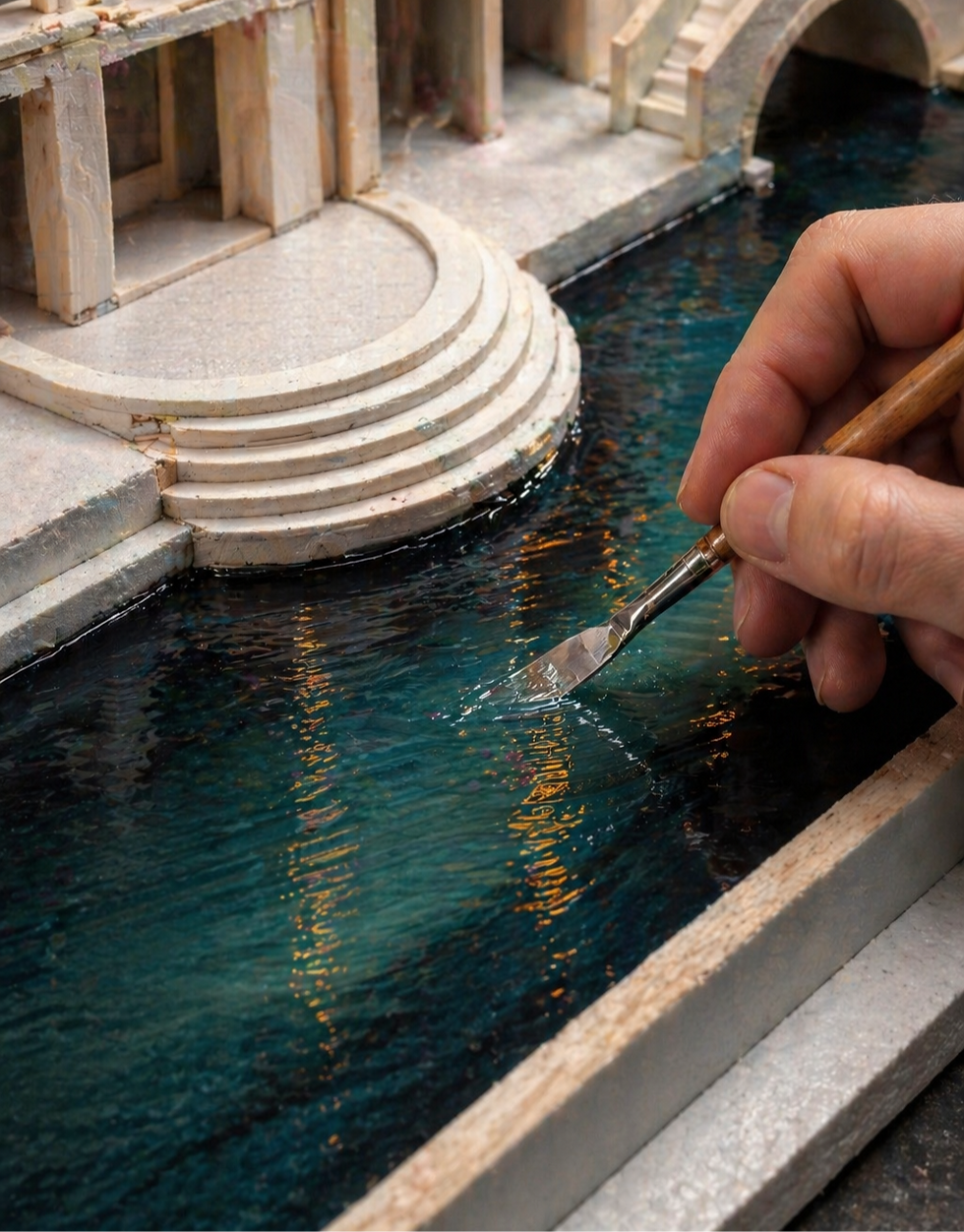
5. Build the bridge: Cut the bridge arch from foam or layered chipboard. Give it a gentle curve and add steps or raised edges. Cover it with stone-textured paint: warm gray, ivory, and a little beige. Dry-brush the top edges so the bridge catches light. Use paper clips, thin wire, or purchased railing pieces for delicate side rails.
6. Add decorative tiles: The tiled terrace is a star. Use printed tile paper, scrapbook paper, or paint your own checkerboard and border design on cardstock. Seal it with matte medium before gluing. For a hand-painted look, lightly glaze tiles with warm gray and cream so they do not look too fresh. Tiny palaces need fancy floors, but not “installed yesterday by a nervous contractor” floors.

7. Shape the rounded steps: Stack semicircles of foam board or chipboard, each one slightly smaller than the last. Sand the front edges smooth. Paint them ivory, then shade the risers with diluted gray-brown. Highlight the step lips with pale cream. Add a little greenish weathering near the waterline so the steps feel canal-kissed.
8. Create the windows: Arched windows are essential here. Buy miniature arched windows or build them from cardstock layers. Use clear acetate behind them, then paint mullions in dark bronze or black. Place warm LED lights behind tracing paper or vellum to diffuse the glow. The secret is diffusion. Bare LEDs can look like tiny interrogation rooms.
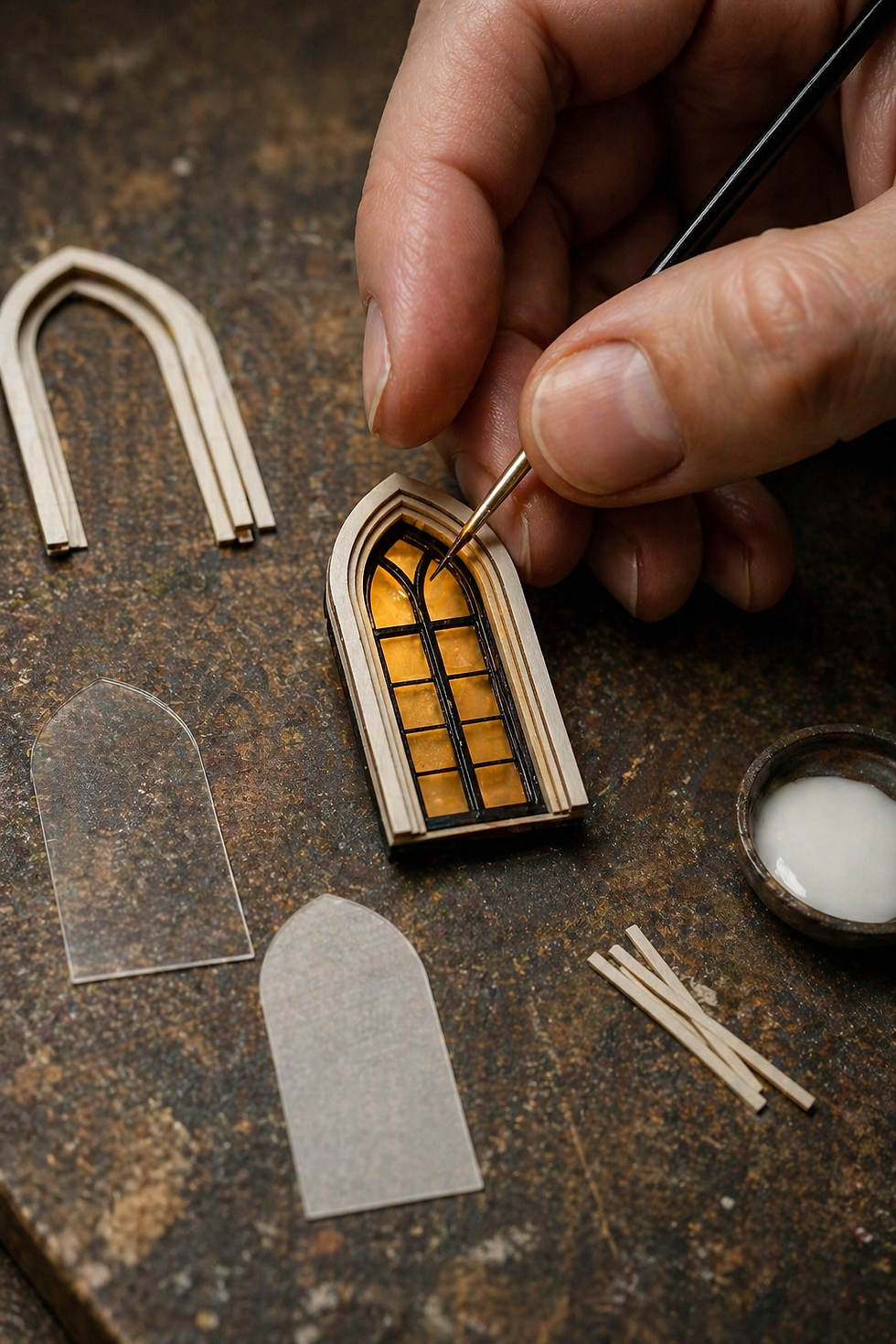
9. Dress the facade with decorative trim: Use thin basswood, styrene strips, jewelry findings, nail art decals, or cardstock cutouts. Layer arches around the windows. Add small columns, scroll shapes, medallions, and cornices. Paint everything a warm stone color, then use a thin brown wash to settle into cracks. Dry-brush with ivory to make raised trim pop.

10. Add the hero piece: Choose one focal point: the grand central arched doorway, the balcony, or the rounded stair landing. Give it the richest detail. Maybe add a tiny lantern pair, a gold crest, or the hidden pigeon symbol from Palazzo Lucerna delle Rose.
11. Add plants and flowers: Use preserved moss, sponge flocking, paper leaves, laser-cut foliage, or polymer clay flowers. Make planters from beads, caps, or clay. Vary the greens: olive, deep forest, yellow-green, and dusty sage. Add pink blossoms in clusters, not evenly spaced polka dots. Nature likes rhythm, but she hates looking measured by committee.

12. Light the scene: Warm white micro LEDs are your friend. Place them behind windows, inside lanterns, and under balcony overhangs. Hide wires behind the facade or under the base. USB-powered LED strands are easy and forgiving. Aim for warm light around 2200K–3000K so the palace glows like candlelight instead of a dentist’s office.
13. Add story clutter and Easter eggs: Add a tiny letter on the balcony, a flowerpot tipped slightly sideways, a miniature oar, a tile with a gold pigeon, or a little sign for “Festival of Misplaced Keys.” These details turn a pretty model into a place people want to inspect.

14. Unify with glaze and finish: Once the palace is painted, use a very thin warm gray-brown glaze over stone and trim. It ties the pieces together and settles the details. Keep water glossy, tiles satin, stone matte, and windows shiny. Mixed finishes make the scene feel richer.
15. Photograph it like a tiny vacation: Use a dark or blurred background to make the warm windows shine. Place the camera low, close to canal level, so the water becomes part of the story. Add a small LED off to one side for a sunset glow. Shoot through a little greenery in the foreground for that dreamy “I found this palace while trespassing in a fairy-tale travel brochure” feeling.

Troubleshooting
Water looks flat: Add darker edges, lighter reflection streaks, and a gloss coat.Windows look too bright: Add vellum behind the panes to soften the LEDs.Trim looks messy: Paint the facade one color first, then dry-brush raised details.Bridge feels bulky: Thin the side walls and add delicate railings.Plants look fake: Mix leaf sizes and green tones, then add matte sealer.Tiles look too perfect: Glaze with diluted tan or gray and lightly scuff a few edges.
Closing – Until Next Time in the Small World
I keep coming back to this miniature Venetian palace because it feels like a whole evening caught in one scene: lanterns glowing, water shimmering, flowers climbing, and Biscotti the cat absolutely ignoring local canal regulations.
Tell me your favorite detail: the arched windows, the rounded steps, the bridge, the decorative tiles, the trim, the water, or the plants trying to take over the palace one balcony at a time. Share your own tiny creations with #smallworldminiatures, sign up for the newsletter, and take a wander through the online shop. And when the high-resolution canvas print is ready, give this little palace the wall space it deserves.
Hashtags
#smallworldminiatures #miniature #miniatures #miniatureart #miniatureartist #miniaturemodel #venetianpalace #miniaturevenice #diorama #dioramaart #scalemodel #scalemodeling #modelmaking #miniaturearchitecture #dollhouseminiatures #tinyworld #tinyarchitecture #fantasyarchitecture #canalhouse #venetianstyle #miniatureflowers #miniatureplants #miniaturewater #crafttutorial #handmadeinspiration #miniaturephotography #canvasprint #architecturelovers








Comments